
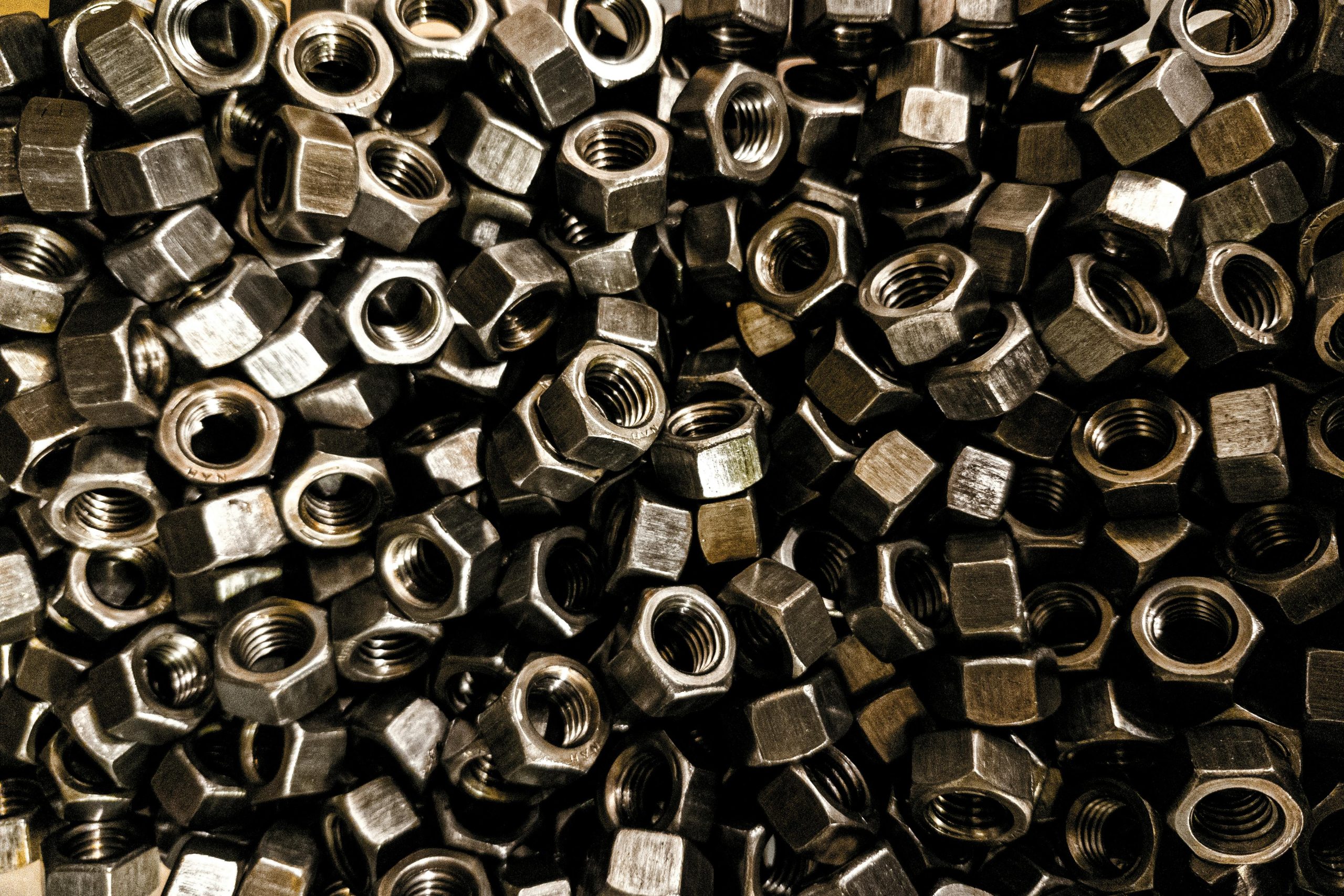
In the world of machines and structures, few components are as essential yet as easily overlooked as the industrial nut. These small but mighty pieces serve as the backbone among countless industrial fasteners, ensuring that everything from heavy-duty construction equipment to delicate electronics remains securely bound. While their presence often goes unnoticed, their contribution is crucial to maintaining safety, efficiency, and reliability across diverse industries. For guidance on assembly methods and best practices, many professionals reference industrial nut resources to maximize efficiency and safety in their projects.
The essential function of industrial nuts
Industrial nuts play a vital role in securing complex assemblies. Working in tandem with bolts and other threaded components, they provide mechanical stability under both static and dynamic conditions. Despite their simple appearance, these hardware items deliver far more strength and flexibility than one might expect.
In the same genre : Top Strategies for UK Financial Institutions in Effectively Managing Credit Risk
By threading onto compatible bolts or shafts, nuts create strong clamping forces that hold parts together without causing damage. Their design allows for easy removal, replacement, or adjustment, making them invaluable for repairs and modifications in sectors ranging from automotive manufacturing to aerospace engineering.
Types of industrial nuts commonly used
The variety of nuts and bolts available today reflects the wide-ranging requirements of different industries. Specialized designs address needs such as secure locking, environmental resistance, and optimal load distribution. Understanding these options helps ensure both performance and safety in demanding environments.
Have you seen this : Top Strategies for UK E-commerce Brands to Curb Cart Abandonment Rates
What distinguishes standard and specialty nuts?
Standard nuts, including hex and square nuts, feature familiar shapes and threads common in general hardware applications. In contrast, specialty nuts meet unique challenges: locknuts counteract loosening from vibration, wing nuts allow for hand tightening, and cap nuts protect exposed threads from damage.
This range of solutions ensures that every fastening challenge—no matter how specific—has an effective answer. For instance, locknuts excel in settings subject to movement or shock, such as in industrial motors or transportation systems.
How do nut designs impact application choices?
Design variations influence ease of installation, reusability, and compatibility with matching fasteners. An engineer might select a flange nut for even load distribution on softer materials, or opt for a castellated nut when added security with a cotter pin is needed. Other forms like slot nuts, coupling nuts, and prevailing torque nuts cater to specialized requirements within advanced assemblies.
Recognizing these differences enables manufacturers and engineers to reduce failures, extend maintenance intervals, and enhance the overall durability and strength of equipment across various platforms.
Materials: choosing the right nut for the job
The material chosen for an industrial nut significantly affects its performance in any given environment. Selecting the appropriate base material means balancing corrosion resistance, cost, electrical properties, and physical strength—all fundamental factors for reliable hardware.
Common materials found in nuts and bolts
Many nuts are made from stainless steel, renowned for its excellent resistance to corrosion and robust performance. Brass offers superior electrical conductivity and non-sparking qualities, which are ideal in sensitive or hazardous environments. Alloy steel delivers outstanding load-bearing capacity and fatigue resistance, supporting heavy machinery and structural projects.
Nylon nuts bring benefits such as lightweight construction and electrical insulation, especially valuable where frequent assembly and disassembly are required. Each material presents trade-offs related to price, longevity, and suitability for particular uses, shaping decisions throughout the hardware supply chain.
Impact of materials on durability and strength
Manufacturers carefully match materials to anticipated stresses and environmental threats. For outdoor installations, stainless steel outperforms carbon steels by resisting weathering and rust. In vibrating machinery, combinations like alloy steel and locknuts prevent loosening, thus improving long-term performance and reducing replacement costs.
OEM and distributors routinely supply technical documentation to guide the correct pairing of nuts, bolts, and washers, helping prevent premature wear or failure. This attention to detail proves valuable in both everyday factory settings and critical infrastructure projects.
Industrial nut standards and production processes
From initial forging to final inspection, modern nut manufacturing relies on automation and strict quality control. Standards organizations publish guidelines governing dimensions, thread pitch, tolerances, and material grades, creating a unified framework for global hardware markets.
Adhering to these norms guarantees compatibility between international suppliers, OEM, and distributors. As a result, threaded components produced worldwide fit together seamlessly, thanks to well-established standards like ISO, ANSI, and DIN.
- Precision thread rolling ensures tighter fits
- Surface treatments increase corrosion resistance
- Automated sorting guarantees uniform dimensions Traceability codes facilitate product tracking
| Material | Strength rating (MPa) | Corrosion resistance |
|---|---|---|
| Stainless steel | 520–750 | Excellent |
| Brass | 200–350 | Good |
| Nylon | 50–90 | Depends on grade |
| Alloy steel | 800–1100 | Fair (may require coating) |
Where do industrial nuts find their place?
The use of industrial nuts extends well beyond traditional machine building. They play key roles in renewable energy installations, civil infrastructure, consumer products, and advanced transportation networks. Their adaptability empowers designers to innovate without compromising on reliability or scalability.
Locknuts maintain critical connections inside vibrating engine blocks, while brass nuts protect electronic connectors in sensitive environments. Large format nuts anchor bridges, towers, and pipelines. Often, the difference between success and failure in these ambitious projects hinges on the integrity of the nut and bolt connection hidden beneath layers of metal or composite materials.
Frequently asked questions about industrial nuts
How do manufacturers test the durability and strength of nuts?
Testing methods target tensile strength, hardness, torque resistance, and corrosion response. Modern laboratories use standardized testing equipment and environmental chambers to replicate real-world stress over time.
- Tensile testing measures maximum pull force
- Salt spray tests evaluate corrosion protection
- Torque wrenches verify required tightening force
| Test type | Typical duration |
|---|---|
| Tensile strength | 5–30 min/sample |
| Corrosion (salt spray) | 48–500 hours |
| Torque analysis | 20 sec per piece |
What factors should be considered when selecting an industrial nut?
Key factors include expected loads, environmental exposure, available space, and compatibility with the intended bolt or stud. Some projects benefit from specialty nuts, while others require only a dependable standard option.
- Material compatibility
- Required level of security (such as locknut vs. hex nut)
- Frequency of removal and reuse
- Cost-effectiveness for large-scale or custom applications
Which industries rely most heavily on industrial fasteners and nuts?
Industries including automotive manufacturing, aerospace, construction, power generation, and electronics depend extensively on nuts and bolts. These sectors demand high-performance fastening solutions to meet stringent safety and operational standards.
- Automotive: engines, chassis, suspension systems
- Aerospace: airframe structures, engine mounts
- Construction: steel frameworks, bridges, towers
- Electronics: circuit board mounts, connectors
How do OEM and distributors ensure the availability of specialty nuts?
OEM and distributors work closely with manufacturers to anticipate demand and diversify stock. Through stocking programs, just-in-time delivery, and flexible supply chains, they can respond quickly to changing project needs.
- Just-in-time inventory management
- Direct supplier partnerships
- Comprehensive catalogs for rapid ordering
This coordination helps minimize downtime and supports both custom and bulk orders efficiently.